
Home>Cost
What Affects Plumbing Cost in Artesia, CA, and Why Two Quotes Differ
No price list here, because none could be sourced. This page explains the factors that move a plumbing quote, service by service, so you can read one with confidence.

This page has no prices on it, and that is deliberate. The price lists found online for Artesia come from directories and lead sellers with no named source or date, so we left them out. What we can give you is the part that decides a bill: the factors that move a plumbing quote up or down, written for the services this network handles, so that you can read a quote and ask the right question about each line.
How a Quote Gets Built
The dispatcher starts the process on the phone. You are asked which fixtures are affected, how long it has been happening, where the water is going and how old the equipment is. That is enough to send the right plumber, and usually not enough to name a final figure. Many jobs hide their real scope until a plumber sees the pipe, the unit or the camera footage.
- The call sets the likely cause and the kind of plumber to send.
- The plumber confirms the cause in person, which can mean a camera, a pressure test or opening an access panel.
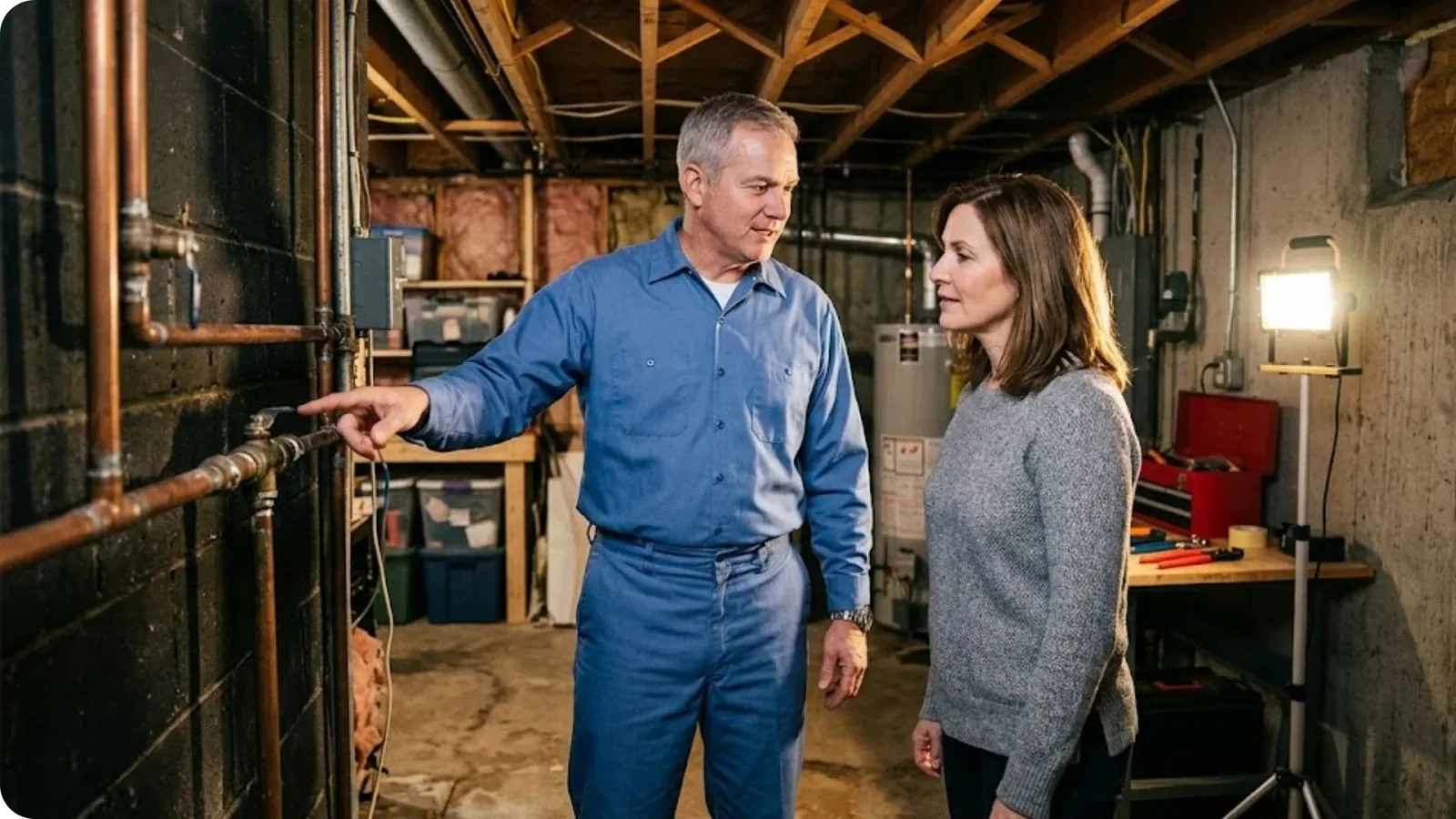
- The plumber describes the scope in plain terms: what will be done, which parts, and whether a permit is involved.
- You decide before work begins. Anything found later that changes the scope should be explained first.
Ask for scope, not only a number: A figure without a stated scope cannot be compared with another figure. Ask what is included, what is not, and what would change it.
Why Two Quotes for the Same Symptom Can Differ
| Reason | What it changes |
|---|---|
| Cause treated versus symptom treated | One plumber clears the drain, another finds and repairs the pipe defect that keeps causing the clog |
| Access | A fixture under an open cabinet is a shorter job than a pipe inside a finished wall or under a slab |
| Parts and materials | Pipe material, unit size and fuel type change the parts and the labor around them |
| Permits and inspection | Some jobs need a permit and an inspection visit, and those add time |
| Restoration | Whether the quote ends at the repair, or also covers patching walls, floors or landscaping |
| Timing | A scheduled visit and an after-hours visit are different commitments for the plumber |
Drains and Sewer Laterals
For a clog, the first question is where it sits. A fixture branch with an accessible cleanout is a shorter job than a blockage in the line leaving the house. A camera look adds a step, and it is often worth it, because it separates grease, roots and a broken pipe, and each needs a different tool. See clearing a stubborn clog for what the tools do.
- Length of the run being cleared, and whether it has bends and offsets.
- Roots, grease or scale, which decide the cutting head or whether jetting is used.
- Whether a cleanout exists, or one has to be added.
For a damaged sewer lateral, the length and diameter of the line matter first, then the condition of the pipe: a crack can often be lined, a collapse usually cannot. Lining also means reconnecting side branches afterward, which is part of the scope. In Artesia the owner keeps up the pipe between house and main, while Los Angeles County Public Works looks after the main, so a quote should name the section it covers. The sewer lateral replacement page lays out the options.
Finding a Leak, Then Repairing It
Finding a hidden leak is billed around time and method. A small house with a few suspect lines is quicker to test than a large one with many. Acoustic, thermal and tracer methods each reach different problems, and a plumber should say which was used and why. After the leak is found, the repair is a separate question. For a leak under a slab, the choice is breaking through the floor at the spot or rerouting the line overhead, and either can leave flooring, drywall and finishes to restore. See slab leak repair choices and how leak finding works.
Repiping and Water Lines
Size and access dominate a repipe: how big the house is, how many bathrooms and stories it has, and whether the pipe runs through an attic, a crawlspace or a slab. Material matters too, along with the wall repair afterward. Replacing the service line out to the street depends on its length and depth, open trench or trenchless methods, and what has to be restored on the surface. Who owns which section matters, since the utility's side stops at the meter and the house side is yours. The whole-house repiping and service line replacement pages go deeper.
Heaters and Gas Work
A tank swap is shaped by tank size and fuel, and by the code items that come with it: bracing, an expansion tank where one is needed, venting corrections and the permit. A repair depends on which part has failed and whether the plumber has it, and on the unit's age, which decides whether repair is sensible at all. A tankless conversion adds gas line size and meter capacity, electrical capacity and panel space, and a venting route with a condensate drain. See replacing a tank heater, repairing a heater and converting to tankless.
Gas work is priced by run length, pipe material and the number of appliance connections, plus pressure testing and inspection. The gas line work page covers what a test involves.
Local fact: Artesia water hardness
Golden State Water reports hardness for its Artesia System between 7.9 and 16 grains per gallon, with an average of 11, in its 2025 data. Two systems serve the city, so your bill decides which applies. Hard water leaves scale that wears out heaters, which is one reason softener quotes differ between houses.
Fixtures, Disposals and Water Treatment
For a faucet or toilet, the choice is parts versus replacing the whole fixture, and the condition of the shutoff valve and supply line under it often tips it: a worn valve that will not close properly is worth replacing at the same visit. A disposal depends on motor size and build, and on any change to the outlet, switch or discharge under the sink. Water treatment depends on the system type, whether a softener, a whole-house filter or reverse osmosis, its capacity, the local hardness and whether a drain and power are available where it will be installed. See fixing a leaking fixture, replacing a disposal and choosing water treatment.
After-Hours Visits and Temporary Fixes
A visit at night or on a weekend differs from a scheduled one in availability and in what can be finished: a plumber may stop the water or make a temporary repair first and return for the full repair when parts and access allow. Ask which you are getting. The homepage explains emergency plumbing steps while you wait.
Commercial Jobs
Scope and building size lead, followed by after-hours access, since many businesses can only be worked on when closed. See plumbing for businesses.
Permits and Water Damage
If a job needs a permit, the plumber should say so before starting and say who applies. For Artesia, call the City's Community Development Department at (562) 865-6262 if you want to confirm what a job needs. If water has already reached floors or walls, drying is a separate scope from the plumbing repair; see drying after a leak.
Want a Quote Explained?
Call and describe the job. The dispatcher routes it to a plumber from our network who will confirm the scope.
Call (562) 271-1710